
This days at Tour de France we are reading lots of comments of how cyclists can be back in great shape in short time after an accident. Probably for recreative athletes that might be difficult to understand, since for athletes without a big base, a injury can decrease their fitness level a lot and the time to recover to the pre injury level can require long time. That is different for athletes with a bigger base.
We need to understand the long term adaptions and short term adaptions required to perform in a specific race.
The long term adaptions are those that take years to acquire, that are in a biological level and that have modified our epigenetic. Those adaptions are also taking lot of time to lose, so a few months of stoping the regular training will make very little impact on that. A great example is when we see a athlete that has been performing very well for many years, then retires and do nothing for a year or so and eventually shows up in a random competition with no preparation at all and still performs very well.
The short term adaptions are those that require short time to get. When we talk about endurance sports we can think about the glycogen pathways, that are key to win races but that can be obtained in a few weeks of work (6-8 weeks) when the base is there. That could be somehow compared to the acclimatization / adaption to altitude or heat, that in some weeks or months of acclimatization we can get the adaptions but once we stop repeating the stimuli (when we come to low altitude for example) It takes only a few weeks to lose all (most) the adaptions acquired.
That’s the main reason on why after a big injury that requires time off training, athletes with high level of performance are able to get back to top shape in short time. The long term adaptions are still there, and when the athlete is healthy to train again, it doesn’t needs a lot of time to get this “top shape” since the short time adaptions doesn’t require many stimuli repetitions to get acquired.
Problems can come if repeated injuries because then the athlete isn’t able to create or maintain this long term adaptions, and therefore over the years the performance is decreasing, but for high level athletes with occasional injuries, to get into shape after a big injury should’n be a worry.
- Get healthy
- Get aerobic fitness
- Get ready
Get healthy: One of the big problems is that when injured, many athletes stop doing any activity and adapt a less healthy lifestyle. If you are in top shape is good to take a bit of weight to bring enough energy to repair, but not too much. Also the quality of nutrients, sleep, stress is key to get a faster recovery, avoiding inflammation that will prolong the injury. So, in my opinion, when a injury happens the first goal is to get healthy, that means to “repair” the injury, and to stay healthy, moving as much as you can without damaging more and
Another problem is that many athletes, and that is something I’ve been falling myself in many times, is to try to get fit before getting heathy, and therefore not letting the inflammation to disappear, and so the injury is persistent or comes back soon after training normally again. One thing is to keep active to keep stimulating the systems (it can be doing activities where the pain from the injury is not present (endurance, strength, altitude, heat…) and the other is trying to train “normally” trying to minimize the pain.
To see if we are healthy and we can start training normally again is important to determine if the cause of our injury is gone. Sometimes a tendon, muscle or bone injury from an accident or an overload is not the cause but the consequence of inflammation in other systems. Where did the injury came from?
- Accident: those are the easiest to heal since normally is “just” to repair the injured thing.
- Biomechanics: If the injury comes from some biomechanics problem it can be sometimes very quickly fixed (with a intervention either in the equipment or in our alignment – back, legs…) But sometimes if that can’t be fixed with those interventions because of our specific biomechanics, we might need to look at the mechanical load of our training to avoid / limit the tensions in the future.
- Training load: Some injuries can come from a load we are not able to hold, and we are in a catabolic state creating inflammation. The first thing here will be to ensure that our load and energy intake are enough to build.
- Impact load: Often stress fractures or tendonitis come from over stimulating some movements without the time to recover. For that, once recovered, is important to rethink the amount of mechanical load to keep the stimuli without overdoing. It can come with limiting the time of stimuli, the period where we stimulate, the quantity or frequency, or reinforcing the implicated muscles / tendons in those movements to be able to increase or sustain that load.
- Systemic inflammation: Those are the most complicated to assess since often the consequences can be assessed to other factors (eg: I’ve got some tendonitis, bone fracture…that could be linked to an accident or overload but they came from inflammation due to stress, to gut inflammation…) And often those need more structural changes on training, lifestyle, nutrition or hydration.
Get aerobic fitness: Here is probably where the biggest time difference is between recreative athletes and elite athletes with a big base. To build an aerobic base it takes long time of repeated stimuli over months and years. For someone with a big base, a couple of weeks or months without stimuli would not change anything, and if during the recovery time the athlete stayed active and kept a good lifestyle, to get a good aerobic fitness can take only a few days or weeks of volume training. But for a recreative athlete without a big base, the aerobic fitness loss can be pretty big, since the stimuli that have been done in the previous years has not been enough to create adaptions that make change in a more epigenetic level.
Get ready: To get the specifics we need for the race shouldn’t take very long (6-8 weeks maximum) if the previous work, the base and health is there. One of biggest problems I often see is athletes trying to put this work on before consolidating the basic fitness or even before getting fully healthy. This more specific work often implies higher charges, both metabolically in higher intensities (with more acidity and inflammation) and mechanically in higher speeds, and therefore if there are remains from the injuries or inflammatory processes, it’s much easier to get a set back or a kind of long term or chronic injury.
Some other considerations
Often athletes are very good at training a lot, but not as good at recovering, specially if not measuring or consistently considering the different loads ( metabolic, mechanic, inflammation). Sometimes we see elite athletes coming back from an injury better than before. That can be explained in part with a “reset” of the inflammation processes with the rest, if keeping a good lifestyle and a more controlled load management during the recovery.
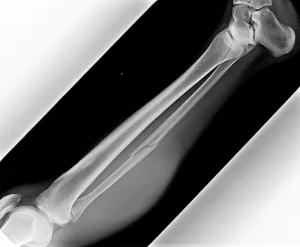
I’ve been lucky to not have many major injuries in my career. One of the biggest ones was a fibula broken in a ski crash during a competition (March 17, 2018). After a month in a cast where I could basically do some strength and some easy moving in a bike with the other leg, one month after I could put weight on the leg and I started with regular short cycling every day. One and a half month after I started running, mostly uphill, and walking down, and increasing running volume progressively. 2 and a half month after the accident I did a long run (170km-22.000m elevation) with no problem at all, and did some local races. A bit before 3 and a half month after the injury I raced Mont Blanc marathon, able to perform well winning the race without any physical or confidence problem with the leg.



Leave a Reply to Jeffrey ColtCancel reply