In sports, it’s often said that reaching the top level is easy compared to maintaining it. One might assume that once an athlete attains a certain level, it would be easier to stay there, as the necessary adaptations and qualities have already been developed. However, the reality is more complex.

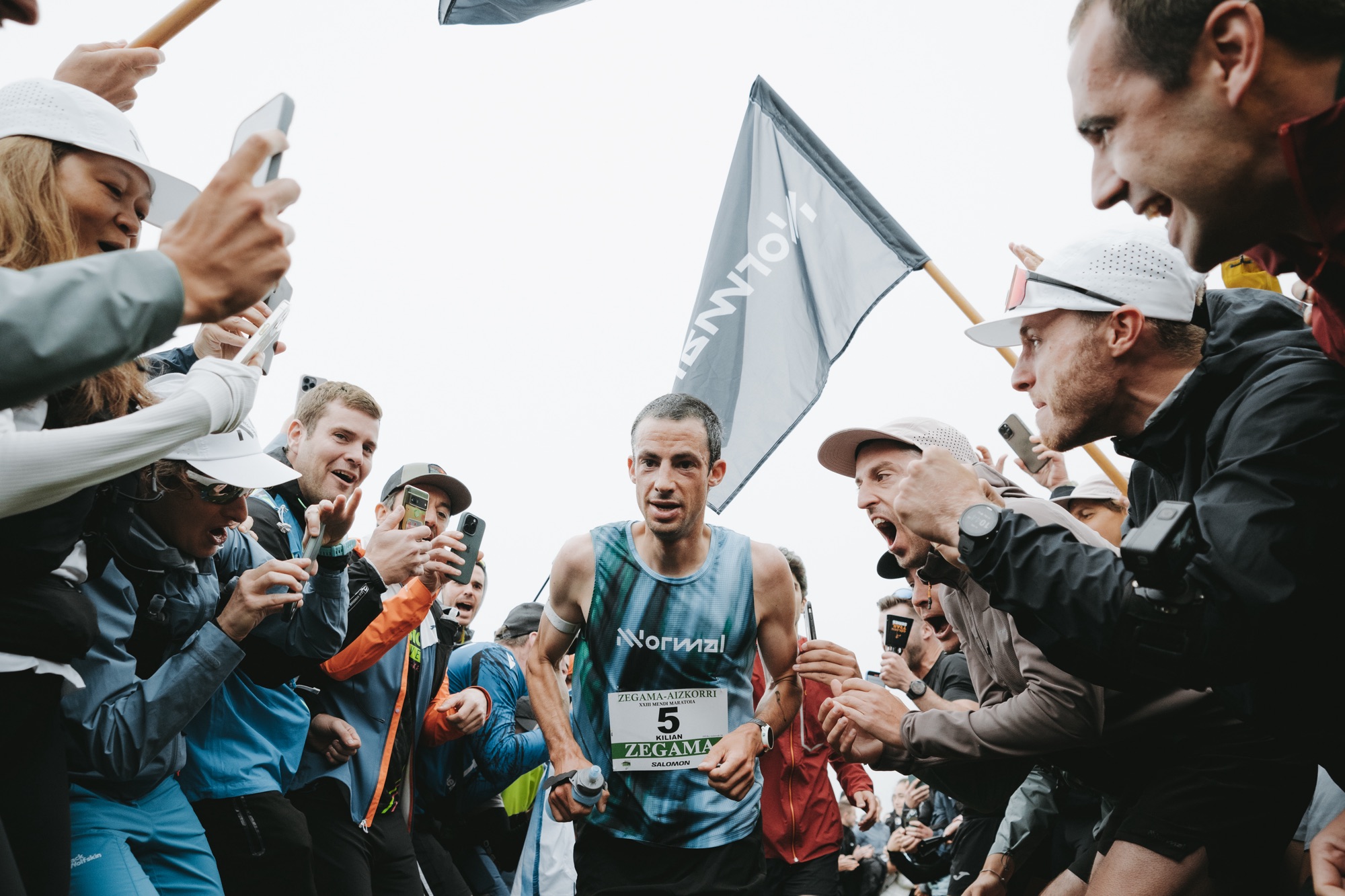
Last week, I competed in the Zegama-Aizkorri, a 42km trail race in the Basque Country. It’s been 17 years since my first victory at this race, and my two best performances have been in my last two participations. I began racing as a teenager in high school, driven by high goals and competitive hunger. Now, I race as a father of two. When I was younger, I believed I would slow down by age 30. Yet, now approaching 40, I still see potential for improvement. Athletes like Kenenisa Bekele, Eliud Kipchoge, Marit Bjørgen or Jeannie Longo and trail runners such as Miguel Heras, Ricardo Mejia, Corine Favre or Ida Nilsson have demonstrated that longevity and endurance sports are compatible. Their examples inspired me to write this article.

Instead of focusing on achieving high performance, which I’ve covered in other articles, I will discuss how to sustain high performance over the long term.

With age, muscle mass decreases, bone density diminishes, lung capacity deteriorates, and maximum heart rate falls. These changes pose significant challenges to maintaining peak performance. But wee keep seing older athletes performing at high level, and that’s because a training lifestyle makes athletes to reduce this deteriorations as well as still creating new adaptions.

It’s easy to believe that longevity in sports is driven by high-tech innovations, but no single technological advance, training trend, or superfood supplement can stop age related decline. The solution is much simpler but far from easy.

The first key is consistency. This means not resting on your laurels once you reach a certain level. Continue to challenge yourself and maintain a rigorous training routine. Often athletes with long careers don’t think much about the past (great) results but work as they were beginning their career towards new goals.

Effective training load management is crucial. And that comes from an individual plan for training and all the other stimuli. Training enough to stimulate adaptations but not so much that you risk injury, which can disrupt training continuity. Find a routine that maximizes training benefits while minimizing injury risk, and adhere to it. One significant change I’ve noticed with age is that recovery takes longer. To cope with this, consider racing hard less frequently or incorporating more easy sessions between hard ones.

Stress management is also vital. Athletes with long careers often lead simple, stable social and family lives. They adhere to daily routines that respect their circadian rhythms and biorhythms, rarely deviating from them. The ability to prioritize this routine over other activities and opportunities is crucial for sustained performance. Additionally, having a supportive environment is important to being able to keep this routine.

Intrinsic motivation is essential to enduring the lifestyle’s challenges, such as pain, fatigue, building back from injuries… While external motivation can boost short-term goals, it’s not sustainable for the long term. The uncertainties of sports results, combined with the discomforts of training, can be too burdensome if motivation relies on external achievements. Instead, the reward should come from a genuine passion for the activity. The athletes often sense a important internal “Why” they practice sport, to keep a strong focus, or refocus when deviating, and this comes from a strong enjoyment of the activity. That enjoyment can come from different angles, competitiveness, self-exploration, exploration, community bounded, the movement itself… but is rarely related to the results themselves but more to one or different emotions that the activity provides in their different facets.

Goals remain important, though. High-level athletes often have a strong sense of ambition, driving them to seek new challenges and continually reinvent their goals rather than resting on their achievements.

Lastly, maintaining overall health is crucial. Staying active both in training and in daily life, following a natural diet and minimizing toxin intake.

And well, at the end training hard has been shown to contribute to a longer life, as discussed in this article: https://link.springer.com/article/10.1007/s40279-020-01379-5.

Image © Anton Guarestti


7 responses to “Racing the time”

  1. Iñigo Valcárcel Avatar
    Iñigo Valcárcel

    No sabía que tenías esta web… Qué pasada!

    En cuanto al tema de la longevidad: Pienso que entrenar duro no solo contribuye a una vida más larga por el hecho en sí mismo de entrenar duro. Si no que, si además de entrenar duro se busca un rendimiento (aunque se trate simplemente de progresar a un nivel amateur), esto te aleja por necesidad de conductas perjudiciales y habituales entre la población en general como son la mala alimentación, el consumo de alcohol, tabaco u otras drogas recreativas o malos hábitos de sueño.

    Una persona que comienza a hacer deporte de forma más estructurada y con objetivos va dejando de forma progresiva y natural estos hábitos perjudiciales y va adoptando otros más sanos a medida que progresa por pura necesidad. Ni siquiera necesita pensar en que es más sano a largo plazo. Cuando uno busca el rendimiento se da cuenta de como cada pequeño detalle afecta al rendimiento inmediato: dormir poco y a deshoras y tomarse tres cañas y fumarse unos cigarrillos el sábado por la noche va a afectar al rendimiento en el entreno (o no digamos la carrera) del domingo. Esto es algo de lo que el deportista amateur o profesional que analiza un poco sus datos es plenamente consciente.

    Sin embargo, el resto de amigos que no entrenan y que probablemente tomaron más de tres cañas no lo notarán al día siguiente de forma tan nítida. Simplemente, se quedarán en casa “pasando la resaca” y ni siquiera serán completamente conscientes del daño que producen sus hábitos. El deporte es la prueba del algodón y quien pasa el algodón por la encimera sabe como la tiene. Quien no pasa el algodón no lo sabe y ni siquiera es consciente de que la tiene llena de mierda. Lo intuye, porque se ve, pero lo deja estar.

    Sin más, una reflexión de quien alguna vez ha tenido un pie en cada lado.

    Muchas gracias por todo este contenido y un abrazo Kilian!
    Iñigo

    1.  Avatar
      Anonymous

      Muy buena reflexión, Iñigo.

  2.  Avatar
    Anonymous

    Gracias por COMPARTIR estos pensamientos con el resto.
    Es una motivación grande.

  3.  Avatar
    Anonymous

    Comecei a correr com 33 anos, não pratiquei nenhum tipo de esporte antes, 20 anos de sedentarismo e um estilo de vida com álcool e drogas, hoje com 36 anos, 22 kilos mais magro, já ganhei algumas corridas no Brasil, fiz minhas primeiras 100milhas e acredito estar na melhor forma física da minha vida. Coloco em prática, ou tento pois sou atleta amador, tudo que está detalhado no post, e ainda acredito que vou ter minha melhor performance após os 40 anos 😀. Bora ser o melhor corredor de 100milhas do Brasil 🇧🇷

  4.  Avatar
    Anonymous

    Intrinsic motivation to enjoy everyday movement it’s the clue. For me to go outdoor and move it is/was a kind of meditation. A reminder that I’m a very little part of the life in the earth. However a part of nature. Competition was only a carrot to add motivation to push hard. Not to go outdoors and move. Despite of that sometimes with family obligations, injuries or social pressure (I’m not crazy to move everyday, birds fly everyday, whale swim everyday, elephant walk everyday… but in our society it’s not accept to move a lot everyday) it’s very difficult to keep going. Because it’s easier to stay in the sofa with a beer. For me, when I haven’t this everyday movement into the nature I went mad. And I suppose that this keeps me moving if not I will finish in the psychiatrist or… The courage to keep going it’s huge. And this it’s what nowadays I admire of your perform not the results but the performance. Great work Kilian.

  5.  Avatar
    Anonymous

    Dear Kilian,
    I have just read your article!
    know that I have admired you for years..I spent my childhood in Saint-Gervais , facing the Mont-Blanc,and the ultra trail from Chamonix run exactly in front of my parents’house.
    Your performances are amazing .
    Thank you for what you say about me and my longevity.
    You are right : I Have always done as if I had new goal for each new season.
    I have kept the intensity but in the same time , lower the number of races to recover..

    congratulations for what you are: not only a great champion but also a nice person.
    Friendly. keep in shape! be safe!!

    Jeannie Longo

  6. Juma Nazir Juma Avatar
    Juma Nazir Juma

    Very well explained, simple to read and understand but need effort to implement. Thanks for these guide lines.

Leave a Reply to AnonymousCancel reply

This site uses Akismet to reduce spam. Learn how your comment data is processed.

Latest Articles

Discover more from mountain athlete

Subscribe now to keep reading and get access to the full archive.

Continue reading