When I ran my first long trail races, support was simple. You carried what you needed, and every now and then, there was an aid station where volunteers handed out water, bananas, maybe some chocolate. If you were lucky, a friend or family member might meet you at a road crossing with a piece of your favorite food. It was basic, and the same for nearly everyone.

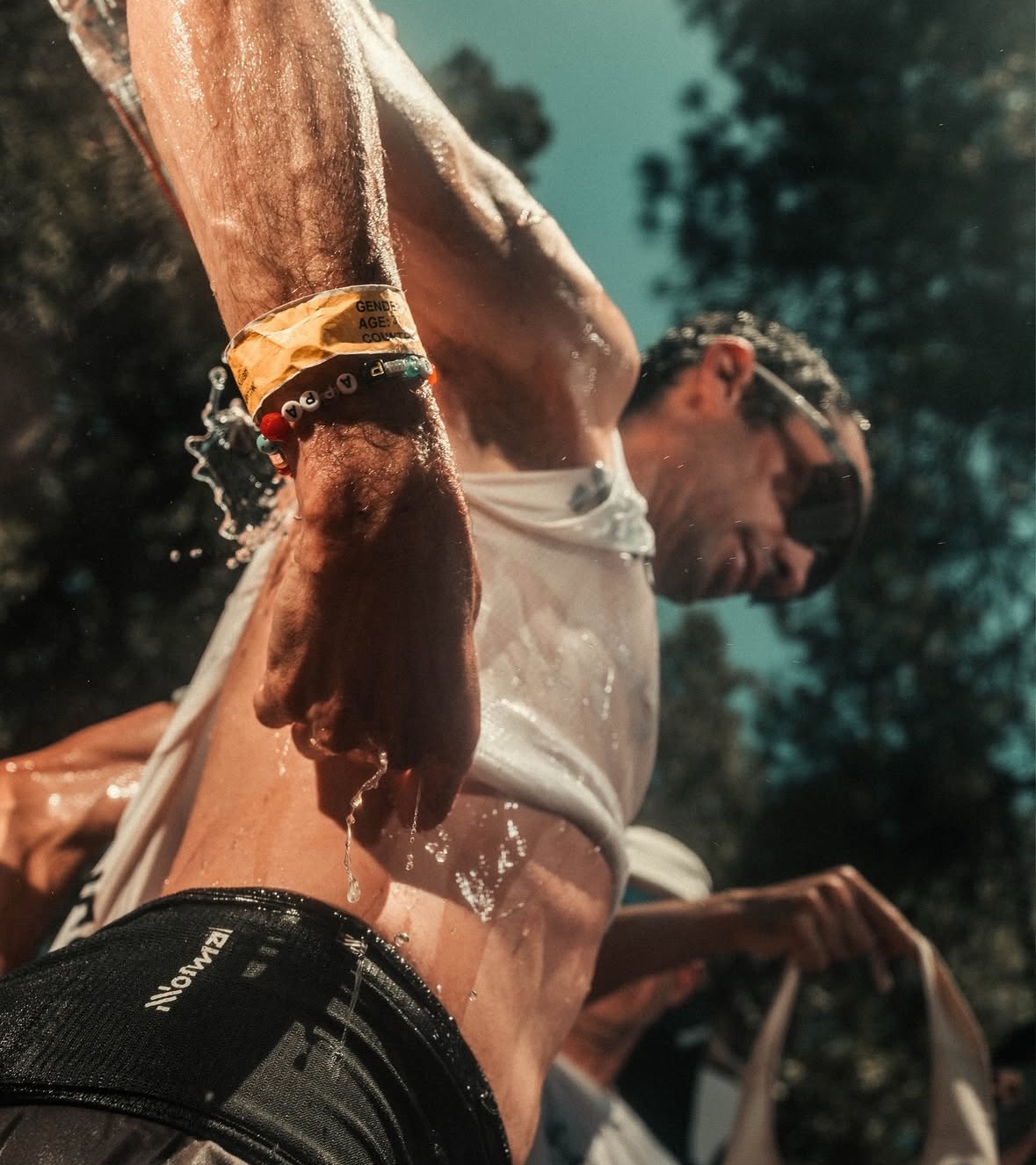
Over the years, the sport has changed — a lot. Today, at some races, professional athletes as myself can have an entire crew at multiple points along the course: people ready with pre-cooled drinks, dry shoes, running vests with all needed for the next section, and even inflatable ice pools. In other cases, you might see an athlete arriving alone, maybe with one person helping out — or no one at all. The difference in support is no longer a small detail. It’s becoming one of the biggest performance factors in modern ultra-trail racing.

Let’s see 2 examples of two elite athletes during an ultra trail race:

The approach in those cases are day and night. One searching for time optimisation and putting all the resources and thought on how to do that, the other mostly improvising on the go. There’s a lot of levels in between and in any case both are inside the rules of the race, in which case, if one is looking to get the best result, will try to maximise resources and optimise aid station time depending on that. But since athletes might have different financial and crew resources, the question is: is this fair? And maybe more importantly: is this the direction we want the sport to go?

Let’s be clear — having some support is not a bad thing. It’s great to have family, friends, or a crew cheering for you, passing you your bottle, maybe handing you your favorite snack or changing your headlamp. It can help you stay in the race, physically and mentally. It brings connection to an otherwise lonely effort. Also during ultra trails where the athlete is running during dozens of hours to have some nutrition that has been tested before and feel good is key, and it would be difficult to carry all from start. So some point of assistance makes sense for it.

But the reality today is that the amount and quality of support varies wildly. Some athletes arrive at an aid station with five people around them: one changing their shoes, one refilling bottles, another feeding them, someone else giving live feedback from the tracker. Others arrive alone, maybe without even someone to hand them a drop bag. And that’s not just anecdotal — it has a direct effect on performance.

At races like Western States, the rules allow this kind of full-scale crewing. In contrast, other events like UTMB have implemented specific regulations: limiting where support can be given, how many people are allowed to assist, and how much equipment can be exchanged. It’s an attempt to level the playing field — and I believe it’s necessary.

This brings us to a deeper question: what kind of sport are we building?

Is ultra-trail running becoming like Formula 1 or pro cycling, where performance depends not just on the athlete but on the size of the team, the technology, and the money behind them? Do we want a future where athletes have a team of support cars following the course, where gear changes and cooling strategies become decisive advantages?

Or do we think of trail running as something related with personal exploration and some degree of being self sufficient in wilderness? A race where amateurs and pros face the same mountains, the same sun, the same aid stations — and the same chance to dig deep.

I’m not advocating for no support at all. But I believe we need clear, consistent limits to ensure fairness — especially in professional races. Regulating the number of aid zones where crews are allowed, limiting how many people can assist, and defining what can be exchanged are all simple steps that preserve fairness in the sport.

This also matters beyond competition. When we normalize excessive crewing, we raise the barrier for entry. It becomes harder for athletes without big budgets or teams to compete on equal terms. It discourages the idea that endurance is about resilience, not resources.

As elite athletes we participate at this game of enhancing the support since we will always try to maximise our performance inside what the race rules permit, so we can have a equal chance to perform with the other athletes that are also maximising it. And doing so, we are bringing more and more aid year after year and making the gap with the athletes that can’t have assistance bigger and bigger. And like that, if the rules keep being open, to get back to a much «fair for all» competition will be more complicated.

Let’s think on how will look the sport in 10 years from now. Do we want a sport where to perform we need bigger budgets, bigger teams and where athletes «only» need to run? Or do we want a sport where all runners are provided with same opportunities and where management of the humans we are in face of the challenges of the natural spaces and conditions are still part of the journey?

For me, I’ll always choose the second.


22 responses to “The aid station debate.”

  1. Ignatio Avatar
    Ignatio

    This is spot on. I’m currently trying to solve this problem , which is you conduct a serious market study is not so easy to solve, and it has really hidden corners beyond the aid not aid. If someone is interested dm uneven_waddles.6h@icloud.com ( it’s not spam or promo ) it is really not a trivial thing to solve , but it is possible and we are working on it

    1.  Avatar
      Anonymous

      Gracias Killian. Sin miedo a decir mea culpa y con esa humildad que te hace mas grande que cualquier medalla.

  2. Lance Cooper Avatar
    Lance Cooper

    With trailrunning evolving into chaos and the media frenzy promoting it I believe the aid station debate needs to be addressed. I think the media issue needs to be addressed as well. I don’t like seeing the pro athletes having a number cameras shoved in their faces at every stop.

    Final thought is that with all the push with making trailrunning bigger makes it more expensive for the average runner just to run through the mountains.

    You wrote your thoughts down well and I agree with you.

  3.  Avatar
    Anonymous

    It comes with the territory. Live broadcasts = More viewers. More viewers = More ads. More ads = More prize money. More prize money = More athletes can afford a crew.

    The question isn’t if crews should be allowed, that boat has sailed. The question is who will be the first household name pit crew captain personality to be a media star in his own right. My guess = Someone who’s using his own drones/drones to follow his runner into the station AND also using drones on long patches between stations to drop water battles to his athlete on the run.

    And that last part will be incredibly cool live streaming that regular running broadcasts cant compete with. Ultra running is about to overtake (yes, I said overtake) regular oval running and street city marathons as a broadcast sports. We’re winning!

    1. Sim Avatar
      Sim

      The boat hasnt sailed at all. The question you are asking is mostly unrelated to the debate

      1.  Avatar
        Anonymous

        I agree up to the point that the boat hasn’t sailed everywhere – but let’s be realistic here – even if some races decides to turn their back on future technology, teams at aid stations and pit stop efficiency – that will just leave an opening for other races to move in and take over. We live in an attention economy, i.e sponsor money follows eyeballs and bums in seats at home. No-one’s stopping anyone from running old school, but the races that are the biggest household names in ten-fifteen years are gonna be hightech broadcasts and built around runners with maximum support all the way.

  4.  Avatar
    Anonymous

    I agree 100% with Kilian’s opinion here.

  5. Umut Erdal Avatar
    Umut Erdal

    The races (at least the big ones) are no longer about fair competition—they’re billboards for brands. Every brand wants its own athlete to reach the podium, and the crowded crews are just a small part of this process. Big capital pays for high-altitude training camps, hyperbaric chambers, nutritionists, luxury Airbnbs, private physiotherapists, and more. So, it’s not a fair competition from the start. We know this, yet we’re still shocked when an athlete gets caught using EPO to compete with the money-backed elites. Regulating crew stations is not enough to create a fair racing ecosystem.

    1. Nomand Avatar
      Nomand

      The day they will start testing …. The Salomon series should at least them.

  6.  Avatar
    Anonymous

    Well said, Kilian. Western States has become a circus. The organisers could, and should, have got this under control years ago. And don’t get me started on pacers…..

  7. Lesley-Ann Kirkland Avatar
    Lesley-Ann Kirkland

    I’d agree with capping numbers at aid stations and limiting where a crew can meet outside of that.

    Ultras should be pure and simple. I don’t want to see it going F1 style. Ultras are a test of fitness and mind games and it’s also a test of character.

    1.  Avatar
      Anonymous

      There’s nothing stopping you from putting on your own ultra just like that.

      No such thing as one size fits all.

      If you don’t like ultras with F1-like pit crews and pitstops – don’t go to them, go somewhere else.

      1. Lesley-Ann Kirkland Avatar
        Lesley-Ann Kirkland

        Anyone with enough money, backing and a crew can win an ultra race but it almost feels like an empty win. Ultras are tough and are ment to be, everything else is just noise.

        To me f1 type pit crews is just cheating and events will become sole less if it continues unchecked.

  8. Agathou Avatar
    Agathou

    Interesting point of view!
    It’s just too bad that you don’t bring the subject of the environmental impact of the support crew…

    1.  Avatar
      Anonymous

      Agreed!

  9.  Avatar
    Anonymous

    “Fairness” isn’t absolute — it’s something created within rules that most people agree on.
    For me, if I had a whole team supporting me and making things too comfortable, I might lose the drive to keep going.
    But for some, seeing a team working hard for them fuels a sense of mission and pushes them to aim for better results.

    Although I’ve never raced abroad, only here in Hong Kong, I can say Hong Kong is a place full of business-minded people — if there’s money to be made, Hongkongers will never let the chance slip away. I can also sense how trail running in Hong Kong has been changing. That’s why I now prefer solo journeys over races, and I have to admit there are more important things in my life at the moment than joining a race to challenge myself.

    Races are great, journeys are great — just different experiences.
    As for the business opportunities and resource gaps behind aid stations, that’s definitely a point worth discussing — what exactly are we competing for?

  10.  Avatar
    Anonymous

    Great take!

  11.  Avatar
    Anonymous

    Excellent point. Every sport wants “fairness” and a “level playing field”, both for ethical and business reasons. So we created rules that apply equally to all, except regarding money which has no rules, and as Kilian suggests, can thus result in functional inequality.

    In American football (the world’s most valuable sports league) there is an annual salary cap (279.2 million USD) to keep the competition relatively balanced, which is both good ethical and business practice. World Pro Cycling doesn’t do that, so the wealthiest teams dominate because they can buy the best riders.

    Mountain/Ultra/Trail running has a strong culture and desire for fairness, so this issue of Aid Station Support should be addressed to keep the playing field level. Plus to reduce the environmental impacts – runners have almost zero impact, but hundreds of cars driving all over the mountains do.

    An interesting side note is illegal drug use. We’re all very much against it. And note that a few pills might cost $100, which anyone can afford, and which are illegal. But coaches, hyperbaric tents, special food and supplements, and large support crews cost at least 10,000 USD, are intended to increase performance, and are fully legal. So the fairness rules we’ve established could seem to be designed to maintain the status of our peer group which is relatively very well off financially, and exclude competition from financially less able countries and people.

  12.  Avatar
    Anonymous

    Hi Kilian,
    I just wanred to ask you one question. Some years ago everybody said, as an endurance athlete you should do fasted non-fueled longruns in order to get fat adaptet. But now, most people suddenly start to eat huge amounts of carbs in every training. Has this more advantages than the fat approach to nutrition or ist this just to test race nutrition? Thank you a lot, you are an enormous inspiration!

  13.  Avatar
    Anonymous

    This debate also happens in dog mushing. When a musher and his/her team get into a checkpoint some races allow crew to support while in others it is not allowed at all. In the Iditarod, no one is allowed to help the musher. The musher must take care of oneself and the dog team. Self reliance is seen as the pure spirit of dog mushing.

  14.  Avatar
    Anonymous

    Money will ruin trail running just like it ruins every other sport it touches. Do you think someone like Mark Williams who was the first finisher of the Barkley and barely even gave an interview could exist now?

  15.  Avatar
    Anonymous

    The thing is, you are saying you want the second option, focusing on fairness, but then doing the first option because you want to maximise performance. You can’t have both. You are in a unique position to actually say that you will not enter races without a fairer crew policy, or in the spirit of fairness commit to going to races without additional crew in order to race in a way you believe is fairer, even if that limits your performance. But you aren’t doing it. If you aren’t willing to, with your unique position in the trail running world, who will?

Leave a Reply

This site uses Akismet to reduce spam. Learn how your comment data is processed.

Latest Articles

Discover more from mountain athlete

Subscribe now to keep reading and get access to the full archive.

Continue reading