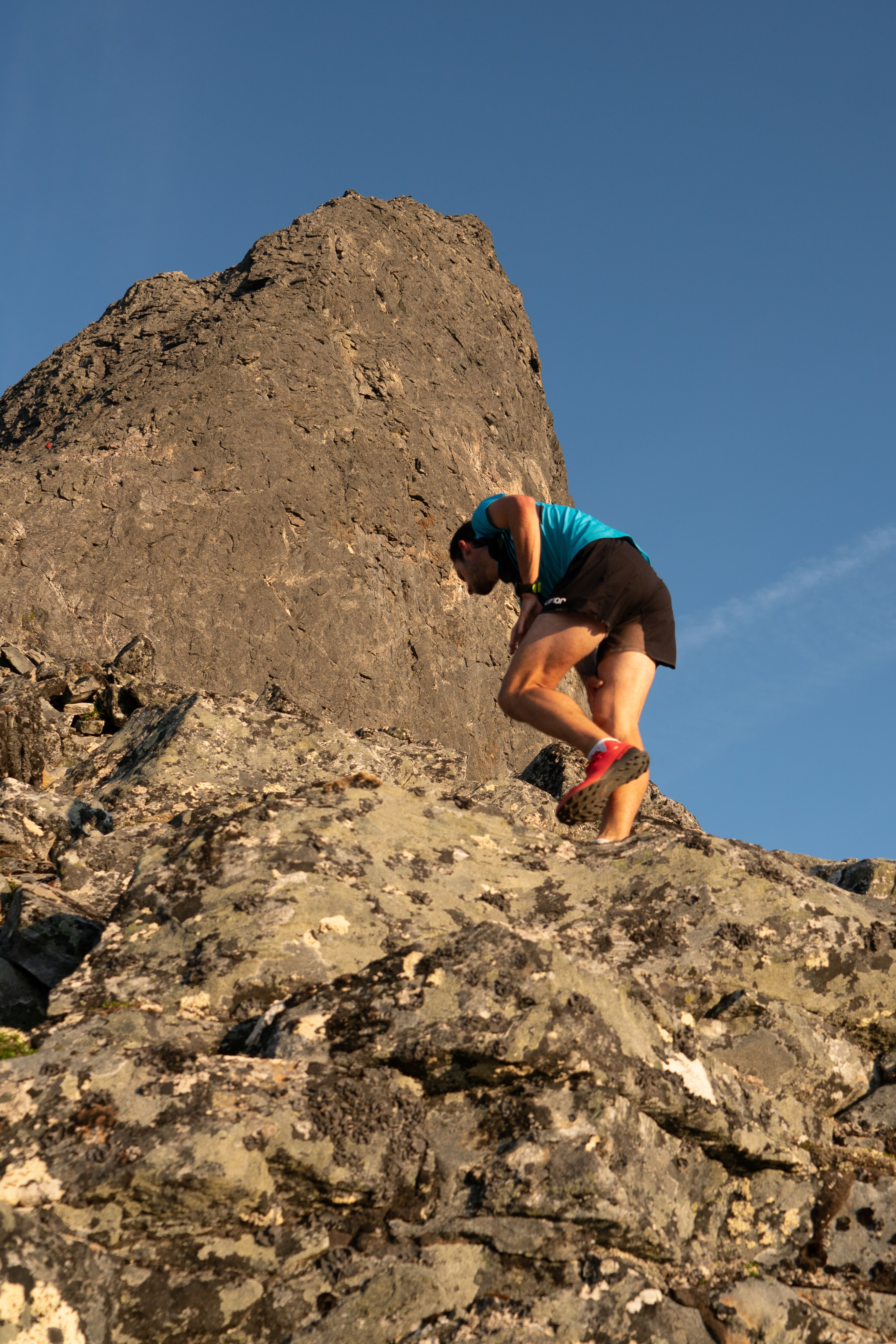

When we run uphill our running speed decreases. This is mostly due to the fact that we need to add vertical speed to the horizontal speed. The qualities to create horizontal speed and vertical speed are different, even if a big base is very similar. When we talk about speed in flat running we take into account basically 3 concepts: VO2max, lactate threshold, and running economy. The VO2 max (the maximum oxygen an athlete can consume while running) is like the engine size, the lactate threshold (the running speed above which lactic acid in the muscles accumulates prohibitively) is how fast we can run for longtime, and running economy (the efficiency) is our body is made for running using the least energy.
All 3 are important for flat and uphill running, but in different grades. While the running economy is one of the most important factors in distance running (not only the technique and biomechanics but the intra and inter muscular connections and muscle adaptations) that looses importance when we start climbing, specially after a 20% gradient. In the other hand VO2max will be more important for steep uphill running where the weight/power is crucial, and therefore the power, or legs strenght is also a key quality.
TEST: Are you more a flat or uphill runner?
Last spring Pablo Villalobos, a succesful track & field and road runner converted recently to trail runner was intrigued by the efficency of his uphill running. In this blog post he explains the test he did and the results:
You have to choose an under anaerobic threshold pace, your half marathon or marathon pace will be OK.
More info and data:
https://pablovillalobosextremadura.blogspot.com/2020/02/are-you-flat-or-uphill-runner-test.html
And Pablo experience/data with the test:
In a treadmill going up to 20% incline, he run 1 minute at each speed/incline looking to his heart rate:
| Minute | Incline | Speed (km/h) | HR |
|---|---|---|---|
| 1 | 0% | 18 | |
| 2 | 1% | 16,5 | |
| 3 | 2% | 15 | |
| 4 | 3% | 14 | |
| 5 | 4% | 13 | |
| 6 | 5% | 12 | |
| 7 | 6% | 11,3 | |
| 8 | 7% | 10,7 | |
| 9 | 8% | 10 | |
| 10 | 9% | 9,5 | |
| 11 | 10% | 9 | |
| 12 | 11% | 8,6 | |
| 13 | 12% | 8,2 | |
| 14 | 13% | 7,9 | |
| 15 | 14% | 7,5 | |
| 16 | 15% | 7,2 | |
| 17 | 16% | 6,9 | |
| 18 | 17% | 6,6 | |
| 19 | 18% | 6,4 | |
| 20 | 19% | 6,2 | |
| 21 | 20% | 6 |
Doing his test he noticed that the HR was increasing. We talk about the test and the results and eventually I did the test myself, but the results were the oposite, my HR was decreasing.
10/1000 Test
Another test I have been doing to see my flat / uphill shape in different moments of the season is the 10/1000 or the 7/700. That is to run a vertical kilometer (1000m+ of elevation) in a great incline (2 to 4km distance) followed by a 10km flat run. Or the same rule with a 700m+ and 7km. Measuring the times in this case. One of the trainings I often do to see my shape home is the uphill to Nesaksla, the local hill of 700m with 2km and then a flat 7km by the road at the botom, at around 3′ (x100m uphill and per 1km flat).
HERE YOU CAN DOWNLOAD THE TEST TABLES
It would be cool if you do the test to share the results to see if in general runners are more flat or uphill efficient.
I also made this table to calculate the uphill pace depending the incline, I found accurate for all terrain runners:




Leave a Reply to AngelosCancel reply