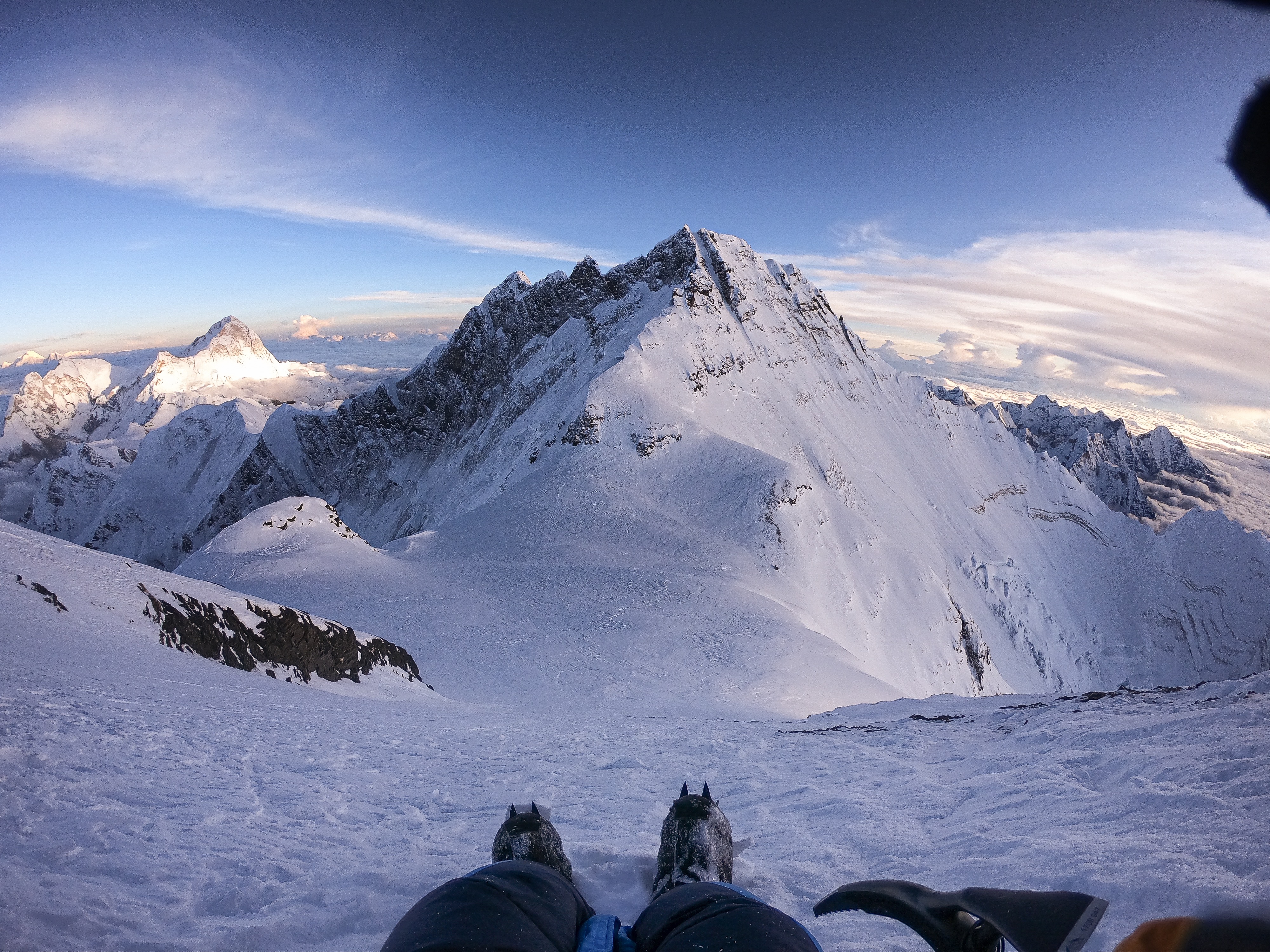

Climbing at high altitude is hard, that’s something everyone knows.
2013 Winter – Shisha

Acclimatization and strategy: I was doing classical skimo season before the departure, so no specific training, nor pre-acclimatizartion home besides training at ~ 3000-35000m- We stayed at Kyanging Gompa, at 4300m and from there we were doing ski tours around for a week. Then we did a 4 day push to see conditions of the goal and go up to 6500m. After that we went down to Syabru Besi (3000m) for 2 days and up to Kyanging (4300m) for a week until we got a good weather forecast. Then a 4 day push where we reached ~ 7500m.
Conditions: Winter (February) Weather was pretty stable with long good weather days. Wind was normally ok under 6500m. Snow started at ~ 4000m and was deep snow up to 6000m. Higher up was blue ice due to strong winds at altitude. It was cold – sometimes very cold- during the night but during the days, even at altitude, being a south face in the sun it became pretty warm.

When I thought about going to the Himalayas for the first time I got connected with two of the most experienced himalayan climbers, Tosas and Coro. They suggested that to discover those mountains it would be great to go attempt Shishapangma from Langtang in winter. We meet at Kathmandu and took the bus to Syabru Besi and hike to Kiangin Gumpa where we stablished our base. There we skied several summits to acclimatize and get used of conditions. I remember one day when we climbed towards Naya Kanga and high up we saw for the first time the south face of Shisha. It looked far away. We did a first rotation trip in 3 days to Haggens pass to see the south face and its conditions and acclimatize a bit. In our attempt, in the end of February we skied for 2 long days to get to the base of the mountain, then we started climbing early and climbed up to around 7500m before realizing it was too much ice to progress safely (we had only a 40m rope and 1 ice screw each) and skied down from there, one of my best steep skiing experiences ever, skiing on a thing layer of snow on top of blue ice with those surroundings. We slept another time on the base of the face and the next morning we climbed up Haggens pass and skied til Kianging Gumpa. Then we run via Gosaikunda til Kathmandu in 2 days.
Even if we didn’t reach the summit, it’s still for me one of my best experiences in the mountains. It was very simple: 3 friends, a small 40l backpack a pair of skis and the minimum necessary to climb. Long days to move long distances and a mountain for ourselves. The climb was challenging from very factors, the distance from the base to the mountain, the winter conditions opening track in the snow lower down and the hard ice higher up and a pretty uncompromised style without any external support from the last village in the Langtang and in a long single push style.
Blogpost by Jordi Tosas of the trip (in Spanish) here.
2016 Summer – Everest NNE Face

Acclimatization and strategy: The month before departure I was training in the alps ~ 4000-4800m and racing in Colorado (Hardrock 100) at ~ 4000m.
Conditions: August. Lot of fresh snow. Good weather and very warm. Storms with big snowfall. No wind.
We traveled to Nepal Jordi Tosas, Seb Montaz, Vivian Bruchez and myself. We spend one week acclimatizing at Langtang before going to China – Tibet and set a base camp at Rombuk. We were the only expedition in the mountain and we had a support of a Nepali cook and a Kitchen boy. We also used 3 Yaks to carry our camp to the division of the Changtse and the East rombuk glacier, where we installed our base camp for the expedition. From there we did some acclimatizing trips to the north col and to the broadman-tasker ridge. In our first attempt, Seb Montaz, Jordi Tosas and myself tried a new route in the NNE face, at the right side of the Japanese route. We left at 4AM our camp and walked til the feet of the face and with sunlight we started climbing. Conditions were great and we progressed quickly til an altitude of 7800m, when a storm hit the mountain with snowfall and strong winds and triggered avalanches in the face. At that point to downclimb the route would be suicidal and we decided to cross right til we reached the NNE ridge and climbed down following the gpx tracks from a acclimatizing round I did a couple of days before there. After 15h and some avalanches we were back at our camp.
At that point we realized that with the high amount of snow up in the mountain it would be very difficult to climb it if the weather didn’t stabilize for some time and we decided to just do activities around. We skied 2 lines on the 7000m peak north from Changtse, on September 11 I climbed Chang Tsé via the north face in a 12h round trip and the next day did another attempt to Everest via the north ridge up to 8000m.
The trip was stressful during the first part waiting for good conditions and lots of snowfall and avalanche conditions, but the 2nd part of the trip was very fun, just doing different activities from our camp as we would do if we were home in the Alps.
Report of the trip for the AAJ here.
2017 Spring – Cho Oyu and Everest North side

Acclimatization and strategy: Preaclimatization passive hypoxia (sleeping) and active for 1 month. more info at this post.
Conditions: Spring. Good weather, precipitations with small quantities. Wind strong at some days. Hard snow conditions. Many expeditions in the mountain. Normal route equipped with fixed ropes. We had a cook and tent at Base Camp and at Advanced Base Camp. I didn’t used a jumar or attachment to the fixed ropes, but they were there so psychologically it helped. I didn’t use any radio or communication device to not get any information during the climb. I carried all my gear from the beginning of any push.
First we traveled with Emelie to Cho Oyu, we didn’t had any porter or support but there were some other expeditions in the mountain. It Seemed that the other expeditions didn’t want to put much effort on climbing the mountain since they had only set a Camp 1 and not fixed any rope in the mountain. With Emelie, one week after leaving home, we did a first acclimation round up to 7500m, there Emelie had a fall but managed to stop herself. We climbed down to base camp and 2 days after we did one attempt.
After 9 days in the mountain, on the 7th of May, we did our attempt, starting from Camp one (6.400m) at 1AM. It was a very windy and cold night. We climbed until we reach 7.500m and waited on a crevasse for the sun to shine, so we could warm up a bit. We continued an at Yellow Band (7.700m), Emelie decided to turn. The weather was supposed to get worse with heavy snowfalls, and an unequipped technical section looked too exposed to downclimb safely when tired. I was really impressed by Emelie, who was climbing really fast, and before that she had only been up to 6.000m!
I decided to carry on. The Yellow Band was more technical than expected with some thin ice and mix climbing. Around 8.000m, it started to snow heavily, and I continued from the last rocky section to the summit plateau. I continued climbing without any visibility towards what I thought would be the summit. The summit of Cho Oyu is not a shaped one, so at some point I reached something that would be the summit. Honestly, I am not sure that this was the summit as I could only see my feet, but I was at some point around. Very happy with that! It was 3PM.

I didn’t wait any longer and started going down. I took an old rope from the mountain and fixed an abseil down the steeper part of the Yellow One so I could climb down. I arrived at Camp One at 6PM. Emelie had already packed our tent and climbed down. It was freezing and I drank some hot drink that an alpinist lend me. Afterwards, I descended to the Advanced Base Camp, where Emelie was waiting for me. It was such a great day in the mountain! The following day, we hiked down to the Chinese Base Camp and drove to Tingri, Emelie went home and I drove to the next valley at Rombuk where I meet Seb Montaz to attempt Everest.
Video of Emelie and I at Cho Oyu:
With Seb Montaz we moved up to Advanced Base Camp and I did an acclimatization round from there up til above Camp 3 (8300m) in 6h. I felt very good that day. We went down to Rombuk and on May 21st at 22h I started a push from Rombuk. I felt pretty good up to 7000m and then I started to feel GI issues. At 8200m I decided to stop eating to stop the GI problems and continued slowly but ok. By midnight I reached the summit after 26h of effort. I went down to ABC and Rombuk. After 2 days of rest we went up to ABC again and on May 27th I started a second push from there. It was very windy and I reached the summit at 21h, after 19h of climbing. In the way down I got lost at around 8300m and deviated towards the north face until I realized my mistake and went back to the normal route. The effort of the first summit and this second climb with no much eating and drinking really pushed my physical and cognitive capacities and the fatigue and lack of glucose in my brain made me stop memorizing for some time what I was doing and did that deviation on my way down.
2019 Autumn – Everest South East Face

Acclimatization and strategy: No pre-acclimatization. Spent 1 month at ~ 5000m in Khumbu
Conditions: Autumn. Hot. Bad weather, lots of precipitation (rain and snow). Lot of snow higher up. We stayed, put our base camp at Gorak Shep. We didn’t had any porters or sherpas with us but there were 2 more expeditions in the mountain and together we equiped the mountain til Camp 1. From there nobody was in the mountain.
I was in Khumbu last month, spending time with my family, training, and climbing. Maj was able to discover the mountains and the local culture. The weather was quite challenging with lots of snow and precipitation. I had certain climbing projects in mind, depending on the conditions and the weather. In the end it wasn’t possible to finish any of the projects for different reasons, but I truly enjoyed the mountains in spite of the bad weather. During the last days of the month, I was able to do a light attempt up to around 8,300 m using a variation of the route to the summit of Everest that Polish mountain climbers took in the 1980s before I had to turn back due to avalanche conditions. Even though I wasn’t able to make it to the summit, the experience of a very light expedition, of being alone on the mountain, and being able to check out some cool possibilities was truly exciting and powerful.
Family
A lot has changed since I climbed Everest in 2017. Probably the most important thing is that now we have a daughter, Maj. We want our daughter to be raised so that she loves what we also love. This is why we planned a very different holiday this year. Like every year, we went to Nepal, but this time Maj went with us.
It’s a place Emelie and I really like coming to. We’ve been there several times, we’re fascinated by the lifestyle, and the terrain is unique. This is exactly why we want to share this way of life and these experiences with our daughter.

Mountain climb
The acclimatization didn’t go as planned. From the moment we arrived to the Khumbu valley in the first week of September we had bad weather with no sunshine and precipitation every day. That’s why we were mostly only able to go up to 6,000 m on small summits. During this time we took some trips with my friend Andrzej Bargiel and his brother and shared some great moments and meals and we talked with other climbers who were at EBC with different goals: Garrett Madison, Bargiel’s team and the polski winter himalaya guys!
A big 60 m serac hanging 1,000 m above the icefall that looked like it could collapse at any moment and the amount of snow were the main reasons all 3 expeditions decided to abandon the climb in late September/early October. The weather was finally looking good in the first week of October (in September we only had 3-4 days of sunshine), so I decided to give a try.
On September 30th Carlos Llerandi and I left Goraksherp and climbed to C1 in very deep snow conditions. We had to open up a track with the snow up to our knees. At some point I triggered an avalanche and fell into a crevasse. The next day we reached C2 in the same conditions. The day after that I climbed to 7,500 m in the couloir left of the Geneva spur to get acclimatized and went down to C2. After some hours of resting, at midnight between October 3rd and 4th I started climbing from C2. At 7,400 m, given the large amount of snow and layers due to an avalanche, I decided to go towards the southeast spur since it is rockier and better protected during an avalanche. I climbed to 8,000 m in deep and unstable snow and then I decided to turn towards the normal route, crossing right, to see if the conditions had improved. When I reached the slopes between the South Col and The Balcony I saw that the conditions weren’t any better. There was a very unstable layer, so before reaching The Balcony, at around 8,300 m, I turned around and went back down.

The next day we took down our tent and went down to Goraksherp.
Even though I wasn’t successful in any of my climbing goals, I was able to try out some exciting and positive ideas that I had in mind.
Cleaning up the base camp and all the logistics. Nepal offers a unique possibility since the villages are close to the mountains. By staying in a lodge in Goraksherp and carrying all we needed to climb (and stay overnight on the mountain), this expedition was closer to the experience and climbing style I have back home in Norway or in the Alps. It doesn’t require the logistics of a complex expedition system (tents, porters, cooks…). I only take what I can carry from home.
It was special being alone on the mountain. Carlos was the only other person there on C2. Doing it in a single push is an extremely powerful experience for me. I feel more like an animal trying to climb. I feel closely connected to the mountain and it’s very difficult to have this feeling in other climbing styles, or with different logistics, or during other seasons. Even though the goal is harder to achieve, what I get out of it is much more intense and positive for me.
2023 Spring – Everest West Ridge

Acclimatization and strategy: I first traveled to Nepal alone and did a couple of rotations to 7000m. Then my Family came and with Emelie and our daughters we stayed a couple of days in Namche Bazaar and then hiked up to Periche where we set our base. From there I did a last round of acclimatization to 8000m, then we got sick from some virus and needed to go down to Namche for a couple days to get healthy again. After that I went to Base camp and then camp 2 with Bertrand delapierre and started my push from there.
Conditions: Spring. Many expeditions in the mountain. All in the normal route. Support at Base camp and normal route equipped with fixed ropes. – to Camp 2 in my route.

I didn’t reach the summit I was aiming for, but everything else. I’m a big believer in the how is way bigger and more important than the what, and in that sense the climb was just perfect. Like a big puzzle with all the pieces but one, the summit one.
In 1963 the deceased Tom Hornbein and Willi Unsoeld made a first ascent of this beautiful route. It was a pleasure to follow their footsteps for a little. My climb started climbing a steep couloir to reach the west shoulder, the conditions there were horrible, blue ice underneath with a top layer of deep snow, 2 steps up and one down for 1000m!
When I reached the ridge it was very windy so I stayed under a cornice for 3h to rest and calm down while enjoying watching the queues of climbers from both nepali and tibetan normal routes making their progression to the summit.
After the wind calmed I continued the ridge and traversed mixed terrain towards the feet of the Hornbein couloir. There, I felt great and conditions were perfect. After a few hundred meters on the couloir a wind pocket (I suppose recently created from the morning winds) broke and provoked an avalanche that carried me down for about 50m. At that moment I doubted whether to continue or to turn around and decided the latter.
The downhill was interesting: with heavy snowfall that made me use the Coros “back to start” feature following my way up, since visibility was 2-3m and my tracks from the way up under deep snow. Well, it was a great day in the mountains, where everything is beyond perfect except I didn’t reach the summit.
Data: during this expedition I was able to bring some devices for measuring some variables (NIRS, HR belt, pulsoxymeter, lactate and ketones blood measurement, tymewear…) I was able to test some of this measures at different rotations during the acclimatization, from 4000m to 8000m the highest one.
| DATE | 30/4 | 4/5 | 6/5 | 7/5 | 12/5 | 14/5 | 20/5 | 21/5 | 22/5 |
|---|---|---|---|---|---|---|---|---|---|
| 30/4 | 4/5 | 6/5 | 7/5 | 12/5 | 14/5 | 20/5 | 21/5 | ||
| Altitude | 6200 | 5400 | 6500 | 7000 | 6000 | 8000 | 5000 | 6400 | 6400 after push at 82000m |
| Glucose | 114 | 121 | 178 | 167 | 112 | 114 | 101 | ||
| Ketones | 0,7 | 0,1 | 0,1 | 0,1 | 0,1 | 0,9 | 0,3 | ||
| Lactate | 1,6 | 2,6 | 4,8 | 3,9 | 2,3 | 3,7 | 2,6 | ||
| SatO2 | 75 | 87-74 | 74 | 75 | 72 | 85 | |||
| mSO2 | 30-25 | 25-15 | 20 | ||||||
| breathing frequency | 60-70 | 45-55 | 30 | 47 | |||||
| HR | 130 | 117, 140 max | 117, max 137 | 100 | |||||
| HRV (rmssd) | 46.1 | 22,9 | 35,3 | 11.1 | 21,4 | 28,8 | 37,7 | 24,5 |
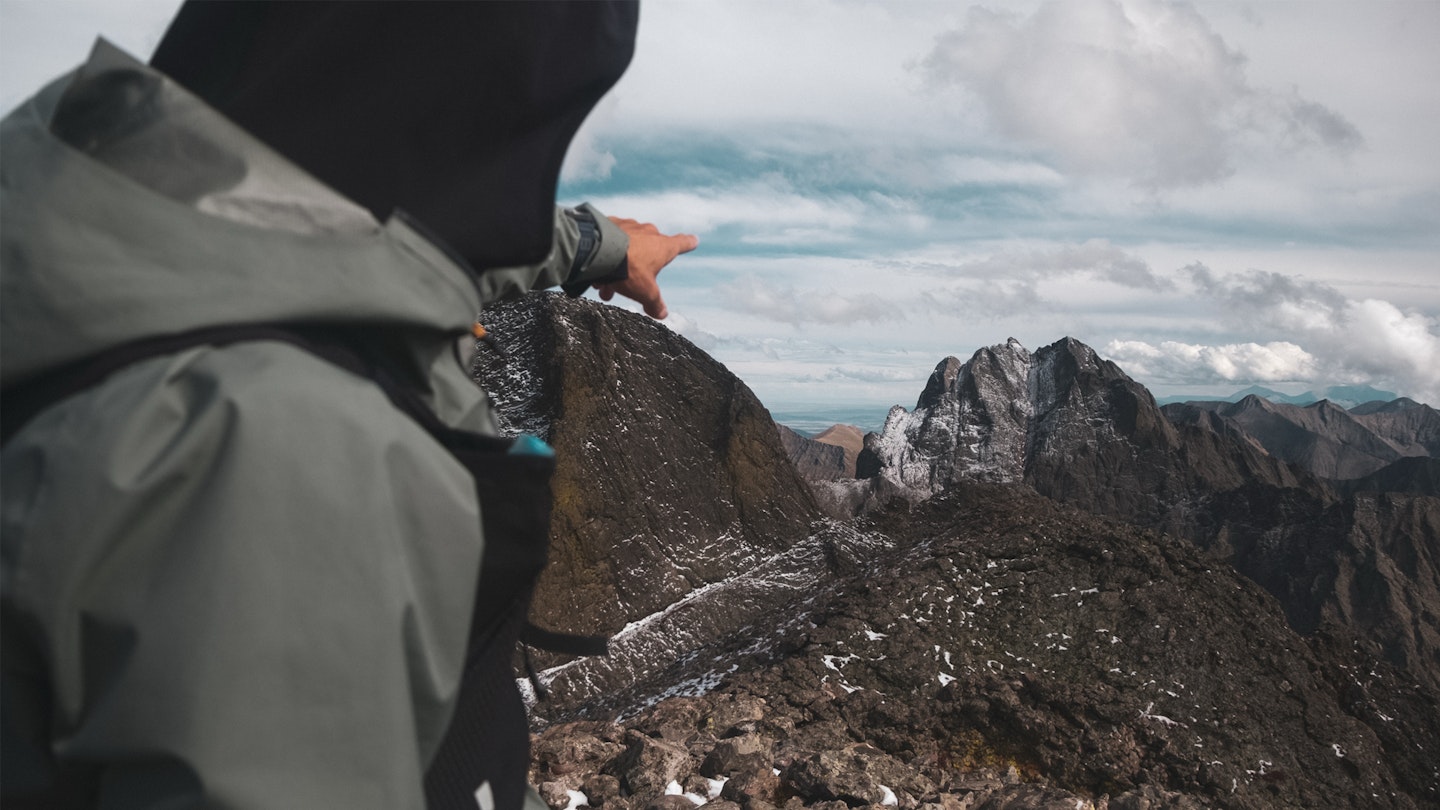
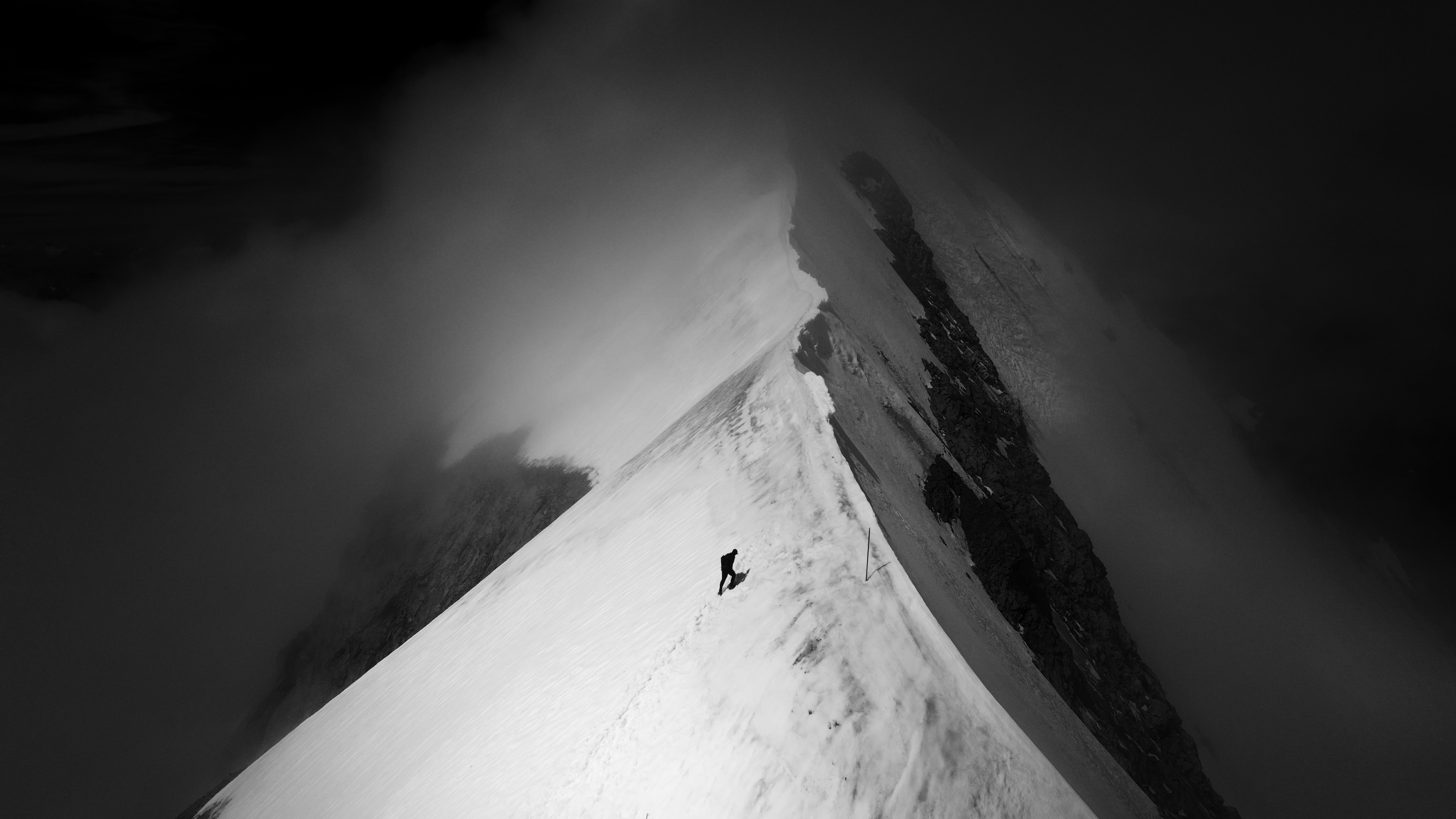
Profiles of acclimatization during different expeditions:


Leave a Reply