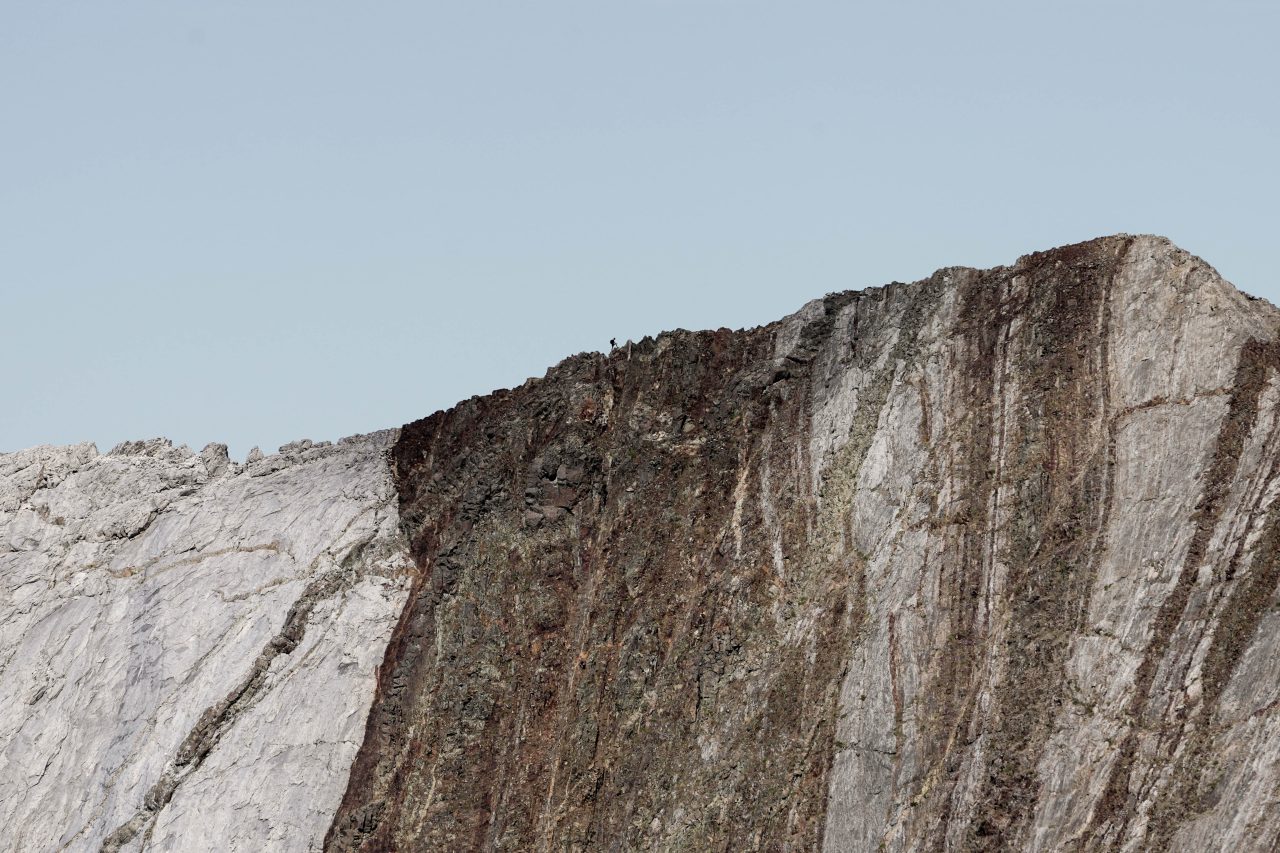

I was born in the Pyrenees, spent my first 12 years of life in the mountain hut of Cap del Rec, did my first ascents, Tossa Plana de Lles at 3 years old, the first 3000er, Mulleres, and Aneto at 5.
When I was a teenager, with my parents we did go on weekends and holidays to climb some of those 3000 m peaks. Then at 11 years old, with my sister, a year younger and my parents we crossed the mountain range from the mediterranean to the Atlantic in 42 days walking. In 2010 I ran this same route in the opposite direction for 8 days. Since then, I’ve not spent many time – if any- in those mountains. I moved first to the Alps and then to Norway. I feel myself as a pyreneist but couldn’t really recall any of the senses of the mountains there – the smells, the texture of the rocks, the ambiance, etc – It felt it was time to rediscover the Pyrenees.
It all started one month ago. As a consequence of two different and unrelated facts:
First, this summer I had a hip injury that didn’t allow me to run on the flat and I couldn’t run the races I had planned, but at home I could train with lots of vertical, scrambling and climbing. I felt in great shape and wanted to do something. It wasn’t any race that really catched my attention to do so I started looking in this list of projects and ideas I sometime thought It would be fun to do.
Secondly, a year ago I ended my partnership with a car company because I didn’t want to promote fossil fuel, but I needed to drive the van to Spain to bring it back.
Then came the idea of a long crossing in the pyrenees, linking the main 3000m summits. To rediscover my motherland mountains and do it in a way that felt ethical and aesthetic, and also a physical and mental challenge.
Since I hadn’ really put feet in those mountains for 20 years and I had no idea if the idea was just madness or something just hard, I send a message to 2 friends who know well those mountains, the guardians of the mountain huts at Colomina and Goriz. Wein and Joan Maria.
Both answered in a second saying it was a cool project, and with their help I started planning a route. I look into the lists of 3000m summits, they’re several, some include or not different principal and secondary summits. For me the link up should be first of all aesthetic and logical, so I decided to link the principal summits on a route where the beauty of the track was the most important.
I also wanted to be exploring the pyrenees. To go fast on known terrain I can do “things” at the mountains home in Norway. In the pyrenees I wanted to discover step by step the mountains while trying to find a flowing pace, to get surprised and excited by what was going to come, to eventually get lost and to decide on the way which route to take, for example if I saw some more beautiful ridge to climb.
I wanted to do some parts alone and other ones with friends, new and old. So, besides Wein Garreta and Joan Maria Vendrell, the guardians, I contacted some old friends and some new ones, like Jonatan Garcia, if they wanted to share some ridges.
With a general line on mind on a gpx track, a couple of pictures on my phone of the topos of the higher graded climbing sections and lots of unknowns I packed my 20L backpack with a pair of poles, sunglasses, a buff, gloves, a light down jacket, thin long pants, a light harness, a couple of cams, a 40m 5mm rope, 2 softlasks, a bunch of gels, a gopro, a headlamp, a watch, a helmet, and some shoes.
My mom asked her neighbors if I could borrow a gravel bike from them, and Gil and Nuria were very kind to let me use theirs.
I drove from Romsdal to Sallent de Gallego, where I arrived in the evening and met with the persons who would be following me in this long week to give me all the support needed. Mireia Miró, a lifelong friend working now at Nnormal, Aina Garcia, with whom I’ve already been in many races and projects like the Himlaya’s, my mom Nuria, and David Ariño and Joel Badia who would be documenting the journey with images.
In the morning Jonatan Garcia drove from Benasque and at 6am we started running from la Sarra towards the Frondiellas.
Stage 1: Balaitous

We already got lost on the first climb towards the Ibon del Ariel bajo, but the night was magnificent and when we found the good way up towards the Frondiellas we got a incredibly beautiful sunrise painting in red all the mountains we could see. The Frondiella to Balaitous ridge went quick and fine and we started downclimbing without difficulties the infiernos ridge. To climb torre Costerillou we put the rope, the rock and grade was generous and that gave me confidence for soloing the climbing sections I would find in the next few days. We did 2 short rappels down and continued the ridge and down to Respumoso hut. That ridge was one of the highlights of the traverse, short but pretty narrow and with great rock! at Respumoso, I went alone towards la Grande Fache and Jonathan continued towards the Garmos. I had not many infos of this area, so when back from Grande Facha I realized I could had cut straight towards col de l’Infierno to cut some time and to make the line a bit more aesthetically than a back and forth. Garmos was a nice run in great trails until the downclimb from Infierno Oriental to join Aguja de Arnales, with some sketchy moves in not the best rock to join the pass between the 2 summits. At Garmo Negro I meet again with Jonatan and we continued the ridge for the last few summits and down to Panticosa where we meet with the team, eat and drank a bit (one of the most difficult things this days have been to find water, being all the time on ridges it was often only one time a day when I could refill water in the flasks). Jonatan stayed at Panticosa and Wein and Marta followed me up to Puerto Viejo where we had an incredible sunset. In front, the west face of Vignemale was completely orange. I felt great up to that point but when I climbed up towards col de Lady Lyster I felt the fatigue hammered me. It took forever. It’s a very steep and long climb, specially after a long day, but I got some animation from the many chamois that were looking at me while I was climbing. I went down by the glacier taking advantage of sand and rocks on the ice to not glide and up refuge Baysellance where I arrived almost at midnight. The guardians, Jordi and Pierre had prepared me a delicious soup I enjoyed before I could have a good 6 h sleep.
Stage 2: Vignemale + Ordesa

I woke up with the sun, I wanted to have light to start the ridge at Vignemale and since the hut is pretty close to the 1st summit, Petit Vignemale, that allowed me a “long” sleep. After a great breakfast and some chat with the guardians about how the traverse is, I started slowly up Petit Vignemale, then one of the most beautiful circus traverses one can imagine strats. After a short downclimb that becomes the most difficult of the crossing, the route always follows the narrow edge in easy scrambling and pretty good rock until Pic de Montferrat. In this traverse I decided not to go to the secondary summits of the lower aiguilles of Clot de la Hount and Aiguille Cerbillona, mostly because it would cut the beauty of a ridge ride to climb down to some indefinite point in a radial ridge and back up again. After Montferrat the quality of the rock becomes more broken and the ridge offers some fun moves if you want to stay on the edge.
At Pic du Milieu I continued downclimbing the ridge that separates france and spain. That’s for sure shorter in distance but it involves a lot of climbing up and down and sometimes some not easy climbing on some of the towers in the edge. Probably here getting down to Bujaruelo hat and up to port de Bujaro might be much faster, but it was kind of an adventure itself, getting lost, frustrated and following chamois tracks to stay in the ridge. At some point I decided to get down from the ridge to get some water before port de Bujaro, where I met with Aina, Mireia and Nuria. I there called Joan Maria, Goriz guardian to ask for the best passage to get up to Gabietos and he advised me to take a path in the glacier des Gabietous between Taillon and the Gabietos. Is a nice wild trail up to the glacier. There, either I didn’t find a good way or it’s been changing a bit but I found what became the most exposed section of the entire journey. First to get over the bergschrund it wasn’t evident. I found a weak point where I could climb down the bergschrund and up the rock face. There it was never hard climbing, maximum a III+, but with plenty of sand from rocks falling, and marks of rocks falling there, so I tried to climb up as fast as possible towards a sheltered part, and then traverse right on some crags til a hanging balcony with loose rock. It wasn’t a pleasurable path up but it was pretty quick and somehow fun. Once up in the ridge, the crossing on Ordesa range is pretty straight forward, is basically a good trail all the time linking the summits and some historical places like the brecha de Rolando. In the late afternoon I meet at Tour de Marbolé with David and Joel, the only people I meet during the day except a couple of hikers. They gave me some water and we enjoyed the nice evening lights before we went our separate paths. At pico Marboré I climbed down the ridge that goes towards the Astazous. Some steep downclimbing in dubious rock. After a couple of hundred meters the ridge follows some nice gendarmes before easing towards Petit Astazou. I tried to remember the ridge since the sun was setting and I would need to climb up again in the dark. Arriving at Grand Astazou the sun offered another incredible sunset, with the Vignemale in the right, the Ordesa range in the left and in my back, the Perdido and the Neouvielle, where I would go the next day. I could cut from Grand Astazou to the middle of the ridge back before it went completely dark and climbed back to Pico Marboré without problems. Climbing at night is something I got used to really enjoy it, maybe since moving to Norway or in the long pushed in the Himalaya I got more used to it and it’s a completely different experience. The beauty of the landscape disappears but you appreciate more the beauty of the shapes of the rock formations in front of you. The sens of orientation changes from the vision sense to the ears and the sense of touch with the wind or temperature differences between sides of the valley. After Cilindro, at the feet of which I found a delicious tortilla de patatas and some refreshment let by the Goriz guardians, and Monte Perdido, I got a voice message from Joan Maria explaining me how to continue towards Soum de Ramond that eased the navigation in this section. Up til there I felt pretty energized and in shape, but from there the long downhill to Pineta took a toll on me. I arrived there around 3am, with pretty tired legs. I eated some pasta and bread the guardian left for me and went to bed soon after.
Stage 3: La Munia-Neouvielle

After a short 3h sleep I felt somehow refreshed and after a good breakfast I started with a long climb til Robiñera summit. There some bearded and normal vultures played with the thermics of the morning winds. My plan at Robiñera was to get down to the Lagos de la Munia and up the normal route, but the downclimb from Robiñera didn’t look so easy (probably because I had not look anything beforehand) and after a bit of climb down and up different options I found a way that looked ok and I decided to follow thne ridge straight to La Munia, then follow some balconies to the normal ridge where a big trail takes to the summit. The ridge north linking Sierra Morena, Tromousse, Heid, etc is a very nice and easy ridge with great ambiance. Once we end the ridge an amazing path follows in the left to contour Gerbats in some kind of steep balconies. There I took some water in a river among hundreds of chamois and continued to col de Campbieil where I saw that the ridge towards Pico de Lentilla look more interesting than the pass to Neouvielle and decided to climb there, after a while I was some crampon tracks in the rocks and that reassured me. Basically an easy climb on bad rock surrounded by bearded vultures and some amazing slate rock with parallel lines cutted in it. I ran back and forth to pic Estargne where I met Marta who gave me some water and food.
Then one of the most amazing ridges in this journey started. From the slate rock of Campbieil to the limestone Pic Maou to the granite in Pic Badet and back to limestone at Long…All that in only a few hundred meters!! and another sublime sunset from the summit of Pic Long. One never gets bored of this red and orange light!
The night again, in the ridge, right and left trying to find the best way. Getting up Dent d’Estibere Male I realized that probably the normal route was in the east side but I was a bit tired to undo the last part, some nice steep climbing took me to the summit, back in granite! After the Pale Crabonousse’s I was expecting some nice trail to go down to the Lac du Cap Long, but, gosh! first a long offtrail downhill in big moving rocks, followed by some grassy – rocky long section and a short but slippery climb to Horquette de Bugarret. Going down from there I met with Wein and Marta and we ran together to Cap long where I arrived around midnight. The team was there with the vans and I could eat some fresh salad and pasta before having a good 5h sleep.
Stage 4: Neouvielle-Culfreda-Bachimala

Started somehow fresh and got quickly up to the Conseillers ridge. From there after a quick round to the Turon de Neouvielle I started one of the most beautiful climbs of the journey, the Arête des trois conseillers up to Neouvielle. This is a short but great orange granite route in moderate difficulty, mostly II and III with 2 steps of IV, the first a nice dihedral, the second one almost by the top a nice series of crags. The surroundings in the route are great and the moves and fluidity too.
Long downhill in big blocks to Lac d’Aubert and a short break to eat a bit and change to bike mode. After the scariest part of the traverse – when a pyrenean mastiff attacked me protecting its sheeps – I could relax the bike downhill and drink plenty of water.
At the parking of Saint Lary Soulan V I decided to stop biking there and get up Lostou first. I had planned originally to get up Culfreda before and cross to Lostou, but with the heat of the moment I thought it might be a bit shorter to do it in the opposite direction, to save 5km biking. For context, the only information about this area I had recollected before the trip was “Bachimala is easy”, so somehow I was expecting some rounded summits, what we call “cow summits” with a good trail on them. During the climb there was not any water and when I finally found a rock with some drops of water dropping I didn’t hesitate to stop for a long time to refill my flasks. When I reached Lostou I quickly realized my mistake. The ridge between there and Culfreda looked very long and technical, with plenty of summits in between. It was late afternoon and I didn’t had many hours of light ahead, so I thought the best option would be to cross til Culfreda, then take the normal route down towards Tabernes and go up the long valley to Port de la Pez to join the original plan. I managed to get some network and read somewhere that the traverse to Cullfreda had only steps of III or III+ which reassured me to do it with the gear I had, which was basically nothing. Climbing from Balnier to the first of the Culfreda’s I could see how 2 chamois were sitting in the ridge looking down at me for the full time I was climbing, probably wondering what was someone doing at that time there. Again I got to enjoy a beautiful sunset from the summits, before starting to go down in the dark. Going down I could see a light under me, and when I reached collado de la Madera I met with Luis from Valencia, who with his friend were doing a bivouac there. He offered me some cheese and nuts and we discussed a bit with him about the best way to get to port de la Pez. What I thought would be an easy afternoon quickly became a long night run. Once back at Puerto de la Pez the ridge following all the summits to Bachimala and Punta del Sabre is never difficult, but you’re using the hands all the time on easy scrambling. Fortunately for me, the dark night was broken by a formidable big and red thin moon that was smiling at me. Going down towards the hut, in the forest I could hear the bellowing of the deers, an amazing concert for the ones who wake up early, or go to bed late. I arrived well into the night at 4am at Viados, where I had some rice prepared by the guardians. I ate and went to bed straight, slept for 2 hours and got ready for a long day.
Stage 5: Posets-Perdido

After a short sleep but feeling recovered I ate a great breakfast and with the sun I started following the GR11 collado de Eriste after discussing the best route for the day with the guardian of Viadós. It was going to be a long day and mentally I had breakin it down in 2 parts, from there to Estós, where Jonatan would join me, and from Estós to Llanos del Hospital. That morning I was doubting if it would be possible to finish the whole traverse to keep many more days like that, but when I started to run up I felt more or less ok so I was just focusing on the next summit. The deers were still roaring in the forest. At lbon de Millares I left the GR and crossed towards the Eristes, the first 2 summits went pretty straight forward but for the last one I saw a mark (or wanted to see a mark) so instead of contouring the summit and climbing its normal route I stayed in the ridge. The climbing was never that hard but at some point I doubted that if that was not the way and I was going to find something unclimbable ahead I would be able to downclimb with ease. Fortunately the climbing never became harder and in short time I was at the summit.
The guardian from Viadós had told me that the best way to Forqueta from there was to undo the way to Ibon de Millares and retake the GR and normal route up, but that seemed a long way and the south face of Forqueta looked easy so I decided to traverse straight on a boulder’s sea to the feet of Forquetas and scramble straight to its SE summit before traversing to the main. At that point I was so thirsty and it didn’t look that it was any water ahead of me for hours so I decided to go down to a small lake (Ibon Lladraneta) and since I was there to climb one of the most aesthetic summits of this region, the Diente Llardana, a narrow tower surrounded by bigger summits. from there I crossed on big boulders towards Diente Royo and the beautiful ridge that goes up to Posets. At the summit I meet David and Joel who were taking pictures and after taking a sandwich I continued climbing down towards Pico de los Gemelos. Some blood started coming out from my nose, after so many days without much drinking and a old cold I carried from home before starting my throat and nose were full of mucus and at some point that was going to happen. I covered the nose as well as I could and continue climbing up in easy but unstable rock up to Veteranos and to run slowly down to Estós, where the night was embracing me. No sunset in the heights tonight!
At Estós I met with Jonatan, his father in law, Joan Maria and a friend of his, Lluís. Joaquin, the guardian, prepared us a potato omelet and lentil soup and after a great meal, Jonatan and I, followed for some minutes by Joan Maria and Lluís, started climbing towards pico de Gías. That night was pretty windy compared to the previous ones, but while moving it was never cold. We were chatting with Jonatan and enjoying the beauty of moving on nice ridges with the darkness of the night broken by the thin red moon and the lights of the villages in the north, in France. The terrain was never very technical but we needed to use our hands most of the time and find the best way on the ridges. Just before sunrise we reached Perdiguero. Joan Maria and Lluís had told us that they would wait for us there with some drink and food, but at this point, with such a windy night we were expecting that they would just leave the food on the summit and go back down. What a surprise when we saw on a bivouac place in the summit a safety blanket moving and 2 sleepy and cold men getting out from under it! We enjoyed a beautiful sunrise and soon the sun started to warm us. With the light of the day we could see and admire the ridges we had climbed during the night. The steep face of Spijeoles, the black band in the middle of Perdiguero’s face, an amazing geological feature. During the night I felt kind of clumsy and sleepy, with low energy but with the sun the energy came back. We went then to Pic Lezat, a nice needle with some climbing at the top, and from there we thought that it would be a easy back and forth to Quayrat, but far from that, the route became complex and long between the two summits. After lots of contourning in rocky terrain we got to the normal route of Queyrat by the north and went to the summit, with a huge boulder in the very top that made the ascent somehow more interesting. Seeing that from there to get back to Lezat was going to take a very long time and without any possibility of filling water we decided to go down the normal route, one of the wildest normal routes on a 3000er, and to eat something at Refuge Jean Arlaud. There we ate an omelet and we continued our way to the Crabioules.
The ridge there is magnificent, great rock and ambiance in easy climbing but very aerial with some steps every now and then. What started to happen then to me was interesting. I was feeling energized and in great shape, and very lucid, but I started feeling some kind of Deja Vus. They were very vivid in very concrete situations. The first one came on the ridge there, which I had never done before, we came to a pass with 2 crags, a large one in diagonal and a narrow one with a piton. I had seen that before, and I knew the route was there to the left, I could remember the short conversation we were going to have… That happened a few more times from that point – racing the sun at Boum, when lost getting down Boum, going down to Cavallers, down from Pica d’Estats… Every time as I had lived that exact situation and moment in the past, and that I could knew what was going to happen exactly in the very short term, but when I was trying to situate when in the past I had lived that moment I couldn’t say it with precision…because it had never happened before. Probably with the fatigue and lack of sleep it was a way my mind was reassuring me that it was ok.
After we arrived at Maupas we realized the night was going to catch us again. We discussed with Jonatan what was the best option to go to Boum: to follow the ridge, to abseil down to the Spanish side and take the normal route from this side or to traverse into the French side and take that route up. We decided on the latter and in no time we were on the upper slopes of Boum trying to avoid the darkness to catch us. Another Deja vu. We reached the summit with the sun disappearing and without much waiting we started to climb down towards the Spanish side, not without some detours to find the good way, first downclimbing and then with one abseil, already dark.
From there to Llanos del Hospital it took longer than we thought. At Crabioules ridge my phone decided that it was enough for him for long days and fell from my pocket into the void. And Jonatan’s phone was without battery at this point so our only directions were that we needed to cross left until we hit a big grassy couloir that would take us down to the trail by remuñe valley. When we finally found the grassy couloir we also saw some lights coming up and we met with some friends that came to meet us. We ran all together the long valley til Llanos del Hospital, not without getting into the wetlands just before the hut, getting wet until the waist! We arrived before midnight, after a long 38h push. A warm shower and good food and it was time for a long 6h sleep.
Etapa 7: Aneto

That long night’s sleep felt like heaven! After a substantial breakfast I took my bike and rode the short section until Besurta. I continued running in the dark until a nice sunrise by the lakes below Mulleres, the sun touched me when I reached the summit, which was my first 3000m peak when I was 5 years old. At Pic de Salenques Jonatan told me that I could contour on the Benasque side but I didn’t find a way and I followed the ridge towards col de Salenques, enjoying the sun and some good rock. At some point I found a way down and cut under the ridge until col de Salenques, where Jonatan was waiting for me.
Salenques – Tempestats is such a classic route I had wanted to do for many years. It’s never hard, max V, in an excellent granite. I was climbing with gloves all day now. After many days touching rocks, my hands were as worked and sensitive as my feet. Classics are classics for some reason, and this long ridge checks all the boxes. Playful and fluid we reached the summit of Aneto in not so long. There we met with a dozen people that were standing at the highest point of the pyrenees. We started going down and we met with Jordi and some friends and took some food and water. At Collado de Coronas we crossed a 10m patch of ice. That was one of the only 3 times I touched ice during the traverse (at Vignemale glacier, a bit at Gabieto’s glacier and here). When thinking about the traverse I didn’t know what to expect. I’ve been seeing images of the pyrenees glaciers disappearing over the years but there was nothing at all. Only a few patches of black ice under the most northern ridges, most of it covered by rock debris. Also it was an exceptional warm and dry October. It hadn’t rained for weeks and I was able to go all the time with shorts, even most of the nights.
We continued climbing on worst rock and less sharp ridges all the way to Abadias, which has a beautiful south face with dark orange granite, paradise for rock climbers and where in a few hours I will be climbing a short but beautiful needle. Many gendarmes and needles took us to the feet of Pico d’Alba, where the climbing became more solid and beautiful again. Only a few moves but nice to be climbing on good rock with an evening light. At the summit we meet with Joan and Gusi, we chat, drink, eat and enjoy another great sunset bit before starting our way down. We wanted to go down the south side towards the Ibon de Cregueña but we didn’t find the way and since it was close to became dark we decided to go down north, climb up Collado de Alba and from there navigate on the boulders towards the Aguja SO del Abadias. We arrived there when it was already dark. It was a magical atmosphere with the stars and the big rock walls. We climbed together until the gap between the Aguja and the Abadias wall and there Jonatan waited for me. He told me that the hardest move, a V, was at the beginning so I tried it from the floor and since it seemed fine I continued without rope. It’s a short climb of 30m but with excellent rock, some nice moves and the atmosphere of climbing at night with the lamp is pretty special. The summit is a very narrow needle. After enjoying the silhouette of the surrounding summits in the dark and the starry sky, I made an abseil, climbed down a bit and made another short abseil to join Jonatan. We continued walking towards the pass of Araguells. I ran to the summit and back while Jonatan was resting and thinking about what was coming next.
Being in the dark on this terrain wasn’t easy to move and orientate ourselves so Jonatan suggested best to go down to Refugio Pescadores and then go up again to Llosás. In the downhill Jonatan told me he was tired and didn’t feel like keeping the pace so he would go down to Benasque. I ran down and up again til the Ibon de Llosás following the trail marks, there, since I didn’t have my phone with the maps and track, and hadn’t downloaded a new track in the watch, I shut off the headlamp and saw the shape of the mountains, to recognize in front of me the Russell’s and then I walked that direction until I hit the face of the mountain and I started contouring it going up until I find a way it seemed good to climb. After a while I found some foot tracks and after some stonemen got to the summit without much problem. luckily for me on the other side it was a kind of well marked trail. I followed it down, then did the same exercise with the lamp and shape of mountains for Vallibierna, keeping the thin red moon and some lakes with the moon reflection on my left side. Eventually I met the big normal trail to Vallibierna and went up. At the summit, David and Joel were having a nice bivouac waiting to shoot some images. At that point I was pretty tired, besides the physical tiredness, to find a way to climb the summits in the dark was also very energy consuming. I traversed to Culebras and started the long long way down to Llauset. I arrived there just before sunrise. I was very very tired, but happy with the day we did, some of the best climbing of all the traverse, some magical moments in the night. Aina, my mom, Joan, Gusi and Jonatan, who drove from Benasque to welcome me, were waiting for me. I ate a bit and slept for 2h30 in their van.
Stage 8: Besiberris – Pica

Woke up pretty worn out. But the perspective of not needing to spend another short night before a long day kind of gave me some boost. I ate some breakfast and with the sun already in my face I got on my bike. The route down from Llauset to Aneto village was more like a test to see if my dental implants were solid. What a bumpy road!
Before the Vielha tunnel I left my bike and started running up towards Besiberri valley. That was a refreshment of green after many days on exclusive mineral land. Waterfalls, rivers, lakes, fields and forests were like a caress to my worn body. After the hut I followed some stonemans to get easily up at Besiberri nord via a couloir. I started climbing the ridge. Great rock, nice moves, vultures around. I pass a team of climbers and have a short chat about the beauty of the route. Unfortunately after Besiberri del mig the rock becomes less good and the route more a side contourning than the nice climbing of the first part. At Besiberri sud I met a couple of climbers and asked If that was the summit. It was one of the days I met most people! From Comaloforno I took a ugly decomposed rock couloir to the east to get down to a sea of moving big boulders followed by…well you get it, it was a horrible and long downhill, not the path most tourists go on the weekend. After some back and forth around the Damm of Cavallers, which was empty due to some work they were doing, I crossed to the other side where I met with Joan and Gusi who brought some food and with Wein, who will follow me in the next section.
Wein is the guardian of Colomina, one of the huts of the area, so it was nice to switch off the brain for navigation and just follow him up until Punta Alta, where again we witness a splendid sunset. Quickly we went down til Estany de Colieto, where Miquel, the guardian of Ventosa had left some food for us. Without much stop, with the night getting darker, we took the archipopular Carros de Foc route up Contraix and down til Estany Llong where Pato and the other guardians welcomed us with a great potato omelet and some cake. After some chatting we took the easy route towards Sant Maurici, the hut where my father had started working as a guardian many years ago. The night was warm and we could move fast and in a short time we met with Mireia, Aina and my mom. I took off my running shoes to put on the cleats and started biking down. On the way down, at night I meet lots of deers and foxes. Once at Llavorsí, the downhill ends to start a long and progressive road up towards Vall Ferrera. I was very very sleepy at that point. Once I fell asleep on the bike, and lucky Aina, who was driving the van behind me, honked and woke me up before I fell off the road. With the adrenaline of that I could stay awake until Vall Ferrera, where I left the bike and started running up the road.
Marta was waiting for me there and together we started walking up towards Coll de Sotllo. After some time we saw a light approaching us very fast from behind. It was Jan Ballbe, a young runner who works in the summer at Vall Ferrera hut. Him and Marta were chatting in front and I could enjoy their conversation in silence. With his knowledge of the area in no time we were up at Coll de Sotllo where we met my mom, Jordi Canals – my first coach – and David and Joel. We chat a bit and while they were going straight to Pica d’Estats, Jan run back since he had to get ready for school in the morning, Marta and I went to Sotllo and then Montcalm. The sunrise there was magical. Not a drop of wind, in the west I could see the mountain ranges I had been climbing over the past week. The emotions were shart, under and over the skin. We ran together til Pica d’Estats where we met the others. The morning sun caresses our skin. I’m tired, but happier.
- 🚲 https://www.strava.com/activities/10011793387
- https://www.strava.com/activities/10011794446
- 🚲 https://www.strava.com/activities/10011796302
- https://www.strava.com/activities/10011796520

Together
It was a hard traverse rediscovering the mountains I grow up walking. Where I discovered thet people ran in the mountains, where I get inspired by the stories of Russell, Audobert, Brulle and many others. It wouldn’t have been possible to do it without the help of “Wein” Gerard Garreta, Marta Pobleta, Joan Maria Vendrell, Jonatan García, Aina Grau, Mireia Miró, my mum Núria, the guardians of all the huts I passed by (Baysellance, Goriz, Pineta, Viados, Estós, Portillon, Llanos del Hospital, Ventosa, Estany Llong. To the photographers David Ariño and Joel Badia. To Joan Sola, Gusi, Jordi, and other friends who came at some point of the route, to Jan… To Nuria and Gil to let me borrow their bike and prepare it with cure… Eternal thanks to all of you!


This traverse was beautiful and playful. I wanted to do it in a way to find many unexpected, to discover among the way and to use the small toolbox I have (on climbing when fatigued, on navigation, on fuel and water metabolism, etc.) because I thought that with the experience I have acquired over the years doing this kind of activities in diverse mountain ranges it was among my possibilities. It’s not to set an example of any sort. I believe that when someone wants to so some activities of this sort is important to have a good understanding of its own capacities and limitations, and that in general is better to prepare to avoid the unexpected surprises.
Strategy and feeling:
| Stage | from | to | time of exercise | elevation gain | distance | hour of arrival | sleep time |
|---|---|---|---|---|---|---|---|
| 1 | La Sarra | Ref. Bayssellance | 17h47 | 7000m | 61km | 23h10 | sleep 6h |
| 2 | Ref. Bayssellance | Ref. Pineta | 19h08 | 5405m | 56km | 3h10 | sleep 3h |
| 3 | Ref. Pineta | Cap de Long | 15h36 | 4765m | 40km | 23h58 | sleep 5h |
| 4 | Cap de Long | Ref. Viadós | 18h40 | 6000m | 72km | 3h24 | sleep 1h30 |
| 5 | Ref. Viadós | Baños del Hospital | 38h07 | 8300m | 71km | 22h45 | sleep 5h |
| 6 | Llauset | Llauset | 23h51 | 5400m | 55km | 6h35 | sleep 1h30 |
| 7 | Pica d’Estats | Pica d’Estats | 22h6 | 7200m | 127km | 8h15 |

It was more about exploring than performing. I had not any idea of what to expect. I did had a route in my head and draw it in a map but that was more an idea of what I wanted to do than a studied plan of what to do. I didn’t knew how long was going to take every day or even where I was going to sleep, that was changing and being decided during every day seing where I could reach o sleep some hours. I knew I had the physical capacity to do the distance, elevation and hours from my experience and my current shape. I knew I had the technical capacities to do the hardest sections of the route soloing onsight and in any fatigue condition. But all together during so many days was the challenge, to accept all the unknowns, the problems and to keep going. I believe that was the most important of the project, to just keep moving and accepting it was part of the journey when getting lost, when having pain, when feeling empty, when needing to climb or down climb a unexpected technical section.
The energy levels were undulating from feeling super good and strong, feeling the flow and fly, to feel miserable and suffering at snail speed. The majority of the time it was just a middle term feeling, moving, not fast not slow, feeling ok. Sometimes to change from bad to great it was the sunrise, or a meal, or company, or the concentration needed due to technical terrain or to some danger exposure.
Gear:
- shoes (I used depending the terrain a pair of Tomir 2 (day 2,3,6 and 8) a pair of Kboix prototype (days 1,4 and 5) and then a pair of Kjerag – the same pair I used last year for all races – at day 7 because the other pairs were completely wet when I started)
- backpack 20L (proto NNormal)
- headlamp (Moonlight 2000)
- merino teeshirt (NNormal)
- shorts (NNormal)
- light shoftshell pants
- light insulated jacket
- buff
- gloves
- watch (Coros Apex 2 Pro)
- 2 softflasks
- poles (Leki, 115cm)
- sunglasses
- mobile phone (until day 5, then I lost it. I had basically the maps, gps track, pictures of the topos of some climing sections)
- Then, at stages 1, 5 from Estós and 6 I also brought:
- Rope 40m 5mm dynema.
- 1 safety carabinner
- 1 light harness
- 2 cams and a sling
Food and hydration:
To eat and drink was also complicated. The warm summer and autumn left the mountains very dry. I basically started with 0,5L of water and then filled a second 0,5L softflask in some river or lake before arriving at the ridges. Once I was in the ridges I couldn’t find water for the biggest part of the day, only when changing range I was going low enough to find some river or lake. In average I drank 2L during every stage. For food I brought 6 Maurten 160 gels with me every day, most of the time I was eating one gel every 4-5h. when I had some extra food from huts or so I didn’t eat a gel. Basically it was to have always something to eat every 4h. In the evenings when arriving to the huts I was eating a plate they had left for me (basically soup, pasta or rice, salad, bread, cheese) and drinking as much as I could, and for the breakfast I was eating the normal hut breakfast.
Day 1: 6 gels + 2 small cheese sandwiches, beetroot juice and soy milk (Panticosa) + soup with bread for dinner.
Day 2: brakfast cacao milk with cereals, bread with confiture. 7 gels, 2 small cheese sandwiches, 1 piece of potato omelette. For dinner pasta and sallad, soy milk.
Day 3: brakfast: cacao milk with cereals, toasts with confiture. 6 gels. Sallad, omelette and pasta for dinner, soy milk.
Day 4: breakfast bread with confiture and soy milk. 6 gels. A omelette at St Lary. A piece of cheese. For dinner curry rice and bread, soy milk.
Day 5-6: breakfast cacao milk with cereals, toasts with confiture. 6 gels, 1 potato omelette at Estos and another at Jean Arnaud huts. Dinner pasta with mushrooms and chocolate cake.
Day 7: breakfast cacao milk, toasts with cheese. 4 gels, 2 cheese sandwiches at Aneto and Alba brought by friends. Dinner sallad and pasta.
Day 8: breakfast cacao milk, bread. 5 gels. 1 potato omelette at Estany Llong hut. Cheese sandwiches and soy milk at Cavallers and Espot.
For the journey I spent about 85000 calories (workload). At the end of the trip, my weight was 7kg lower than at the beginning (taken the day after finishing, after eating and drinking well)
Load and Recovery
It was hard. First, the lack of sleep, specially the last 3-4 days. When back home I slept 9-10 h per day during a week (Normally I sleep 6-7h). I also felt a deep metabolic fatigue for 3-4 weeks, where I was able to train but not really fast. Even if the pace was slow, as well as the metabolic work (most of the time I was at Z1) the demands were high in the muscles and tendons due to the technicality, and also the cognitive load was big. Even if the difficulty was never high, it was never easy easy that you can’t go in “automatic” mode, but every steep of the traverse I needed to be a little concentrated to know how I was putting the feet and hands, and many parts of the route, were on a no fall terrain, where with sleep and cognitive fatigue made risk assessment and to fully control every movement a bit more demanding. Route finding was never complicated but needed attention all the time. Not knowing what to expect also made a slight more stress every day.
During the traverse and afterwards the muscle fatigue wasn’t big. I took care to never go fast on the downhills to “save” the legs. But the articulations, specially knees were very soar, probably because of the amount of elevation and the technically of the terrain that demanded a lot in the tendons.
Also the skin from hands and feet took a few weeks to recover after the traverse.
Just to put into perspective of the load of the traverse, here the weekly volume of my training career, you can see this activity in the right of the graph:

You can watch a film we did about this traverse here: INTO THE (UN)KNOWN

Leave a Reply